


Key Takeaways About Pool Heater Tune Up
A pool heater tune up is a targeted service that inspects flow, ignition, heat exchanger, and controls to improve efficiency and safety. This guidance is for homeowners and property managers who use heaters regularly or before peak season.
- Identify low flow or pressure problems with gauges and flow meters.
- Prevent ignition failures by inspecting electrodes and control modules.
- Avoid heat exchanger damage by checking for scale and leaks.
- Spot thermostat drift by comparing setpoint to measured temperatures.
- Reduce corrosion risk through chemistry monitoring and anode checks.
- Plan regular service intervals based on usage age and seasonal needs.
Introduction
A poorly tuned pool heater wastes energy, shortens equipment life, and can create safety hazards for your family. Many homeowners only notice a problem when pools fail to warm or strange smells appear near equipment. Gas and electric heaters each have specific flow and ignition needs that affect performance and reliability. In coastal climates like San Clemente, California heater wear can show up faster because systems run year round.
Correct water flow and a clean heat exchanger keep a heater efficient and reduce corrosion risk. Ignition components and thermostats that drift out of calibration cause frequent cycling and higher fuel use. Technicians check burners, gas valves, electrical connections, and temperature control to find the root cause. Small issues left alone often escalate into expensive replacements later on.
Safety concerns include carbon monoxide from incomplete combustion and electrical faults that trip breakers or damage controls. Visual signs such as soot, water leaks, or prolonged ignition attempts should prompt a professional inspection. A tune up also reveals failing parts before they fail during peak season. For homes in Laguna Niguel, California owners often prefer scheduled checks to avoid unexpected downtime.
Expect inspections to focus on measurable items like flow rate, ignition sequence, and thermostat accuracy rather than guesswork. Technicians use pressure and temperature readings, visual inspection, and functional tests to confirm issues. That diagnostic approach helps prioritize repairs that restore efficiency and safety. Regular service intervals protect equipment life and reduce emergency repair calls.
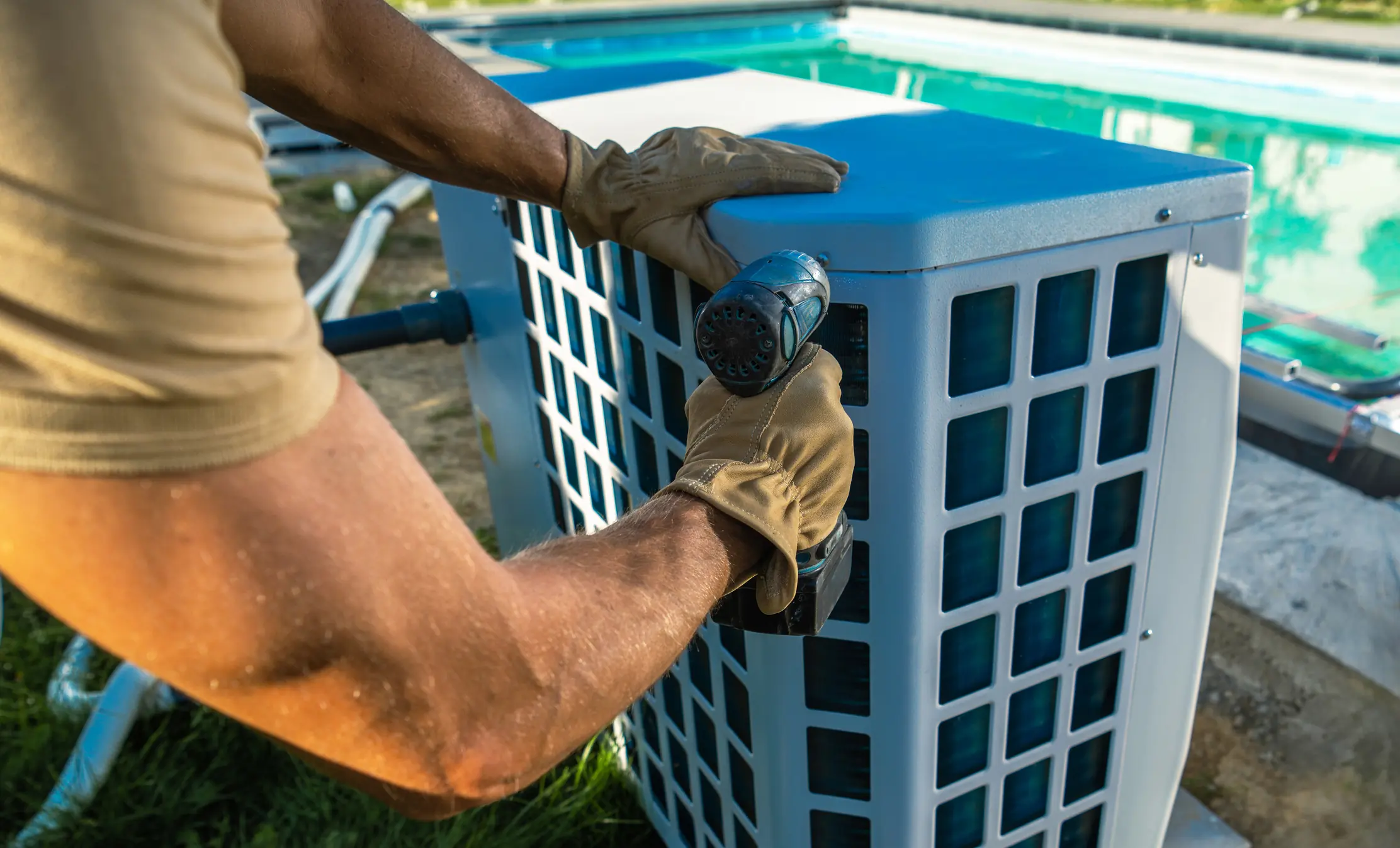
How Gas And Electric Heaters Work And Why It Matters
This section explains how gas and electric pool heaters move heat into pool water and why those differences matter for a pool heater tune up.
- Gas heaters burn fuel to heat combustion gases that transfer warmth to water.
- Electric heat pumps extract ambient heat and move it into the pool water.
- Both types rely on steady water flow through the heat exchanger.
- Controls and safety devices monitor temperature and combustion or electrical faults.
Gas heaters use a burner, gas valve, ignition system, and a metal heat exchanger to transfer heat to water quickly. Electric heat pumps use a refrigerant loop, compressor, evaporator, and condenser that move heat from air into water more slowly. Understanding these components helps explain why different checks matter during a tune up. Homeowners often ask whether a heat pump or gas heater saves money overall, and the answer depends on local fuel prices and run hours.
Flow rate matters for both systems because low flow can overheat and damage a heat exchanger or cause short cycling and poor efficiency. Technicians measure pressure and temperature rise across the heater to confirm correct flow. A visible symptom like frequent on-off cycling or warm-but-not-hot water usually points to flow or control issues. If you want maintenance details beyond a tune up, check the heater maintenance and repair page for common services.
Ignition behavior differs between types and affects safety checks during a tune up because gas units need a clean combustion sequence while electric units need proper electrical connections. Professionals watch startup cycles, listen for abnormal sounds, and inspect burners or the compressor for wear. They also check for soot, scale, or leaks on the heat exchanger that reduce heat transfer. For homeowners in Laguna Niguel, California and San Clemente, California, knowing these differences helps decide which maintenance steps to prioritize.
Common Causes Of Reduced Heating Efficiency Explained
Scale and mineral buildup inside the heat exchanger reduce thermal transfer and make the heater run longer to reach set temperature. Homeowners may notice longer warm-up times or a constant run light when scale blocks water passages. A technician would inspect the exchanger visually and take temperature rise readings across the unit to confirm restricted transfer. Depending on severity, they recommend cleaning or replacement based on measured temperature differential and visible corrosion.
Low water flow through the heater often causes short cycling and poor heat delivery, and it can damage heat exchanger metal over time. Symptoms include rapid on-off cycles and uneven pool temperature around the heater outlet. A professional diagnoses this by measuring flow rate with a flow meter or pressure gauge and checking the pump suction and return plumbing for obstructions. They may also open the pump strainer and test the filter pressure to isolate the restriction.
Combustion problems in gas units produce soot, yellow flame color, or lingering fuel smells and signal inefficient burning that wastes fuel. Technicians watch ignition sequence, inspect burners, and may use a manometer or visual flame check to confirm combustion quality. Electrical faults in heat pumps create intermittent operation, tripped breakers, or noisy compressors that lower performance. An electrician or pool technician traces voltage, inspects the control board, and checks connections to confirm an electrical cause.
Thermostat drift or sensor issues cause incorrect run times and temperature inaccuracies that look like heater failure to homeowners. The check includes comparing setpoint to actual water temperature using a calibrated thermometer and testing the control sensor continuity. For a broader list of inspection tasks and preventive items, see the equipment inspection and maintenance page where technicians document findings and recommendations. In coastal areas like Laguna Niguel, California and San Clemente, California, proactive checks reduce corrosion and keep systems efficient longer.
Flow Rate Requirements And How To Test Them
Proper flow rate keeps water moving through the heat exchanger at the speed the manufacturer specifies to avoid overheating or poor heat transfer. A technician starts by measuring pressure before and after the heater using a pressure gauge and comparing readings to pump and filter specs. They also measure temperature rise across the heater with an accurate thermometer to confirm water carries away expected BTU output. These basic readings help decide if changes to pump speed or valve settings are needed.
Another common check is a direct flow measurement with a flow meter or a pitot tube at the return to record gallons per minute. If restricted flow appears, the tech inspects the pump basket, skimmer, suction lines, and check valve for clogs or partial closures. They may also verify multi-speed pump settings and test the pump discharge pressure to see if the system can reach the heater’s minimum flow requirement. This process helps pinpoint whether the issue is plumbing, pump performance, or the heater itself.
For homeowners in Laguna Niguel, California seasonal debris and leaf load may change flow patterns and require seasonal rebalancing of valves and pump speed settings. Technicians confirm correct flow using valve position checks and by temporarily isolating the heater to observe pump performance without the heater in the circuit. They document readings, photos, and recommended adjustments in a written report so the homeowner can review evidence and decide on repairs. This documentation also helps compare future tune ups to track any decline over time.
Testing low-flow safety switches and flow sensors is essential because these components prevent heater damage but can fail or misread. A pro will simulate low-flow conditions safely to confirm the switch trips and then clear or replace the sensor if it gives false trips. If flow checks point to persistent low velocity, the decision path includes pipe cleaning, pump inspection, or changing pump speed rather than immediately replacing the heater. For more details about related maintenance and repair options, see the pool equipment services page.
Ignition Systems Inspection And When To Replace Parts
Start by watching the ignition cycle closely during startup to catch slow or repeated sparking that signals failure. A technician inspects the spark electrode, ignition module, and wiring for corrosion, wear, and proper gap. They also check the pilot assembly or hot surface igniter for reliable operation under load. If the component shows cracking, heavy corrosion, or inconsistent sparks, replacement is usually recommended to prevent no-starts.
- Listen for delayed ignition sounds.
- Look for soot or blackening near burners.
- Check electrode gap and cleanliness.
- Verify wiring and grounding connections.
- Test safety switches and flame sensors.
For gas valves and solenoids, professionals perform controlled tests to confirm proper seating and response. They measure valve operation and watch for gas smell or intermittent fuel flow that could point to wear. Technicians often use a multimeter and observe valve timing under command from the control board. When valves leak, stick, or fail to respond, replacement prevents unsafe operation and improves reliability.
Electric ignition components like relays and control boards need voltage and continuity checks to diagnose faults accurately. A pro will inspect terminal connections, test for proper coil resistance, and confirm relay actuation during a start sequence. Replacing relays or worn connectors can stop nuisance cycling and protect the compressor or blower from damage. For pump and motor related issues that affect ignition sequence, technicians coordinate with pump servicing work such as those described on the pump motor servicing page.
In a common situation, homeowners notice repeated clicking and a cold pool despite several ignition attempts by the heater. The technician then checks the electrode, flame sensor, gas valve response, and control board outputs to confirm the fault. They document voltage readings, photos, and test results to justify part replacement. This diagnostic record helps prioritize repairs and avoids replacing parts that still meet operational thresholds.
Heat Exchanger Condition Checks And Repair Decision Points
Inspect the heat exchanger for visible cracks, pinholes, or severe pitting that lets pool water escape into combustion or refrigerant pathways. A technician uses a flashlight and mirror to view hard-to-reach welds and joints and may pressurize the water side to check for leaks. They also look for signs of internal erosion where water discoloration or metallic flakes appear at returns. If the exchanger leaks under test, replacement usually beats repair due to long-term reliability concerns.
Scale and internal fouling often start as reduced temperature rise despite normal flow and correct ignition or compressor operation. Pros measure inlet and outlet temperatures and compare the delta to manufacturer expectations while inspecting for layered mineral deposits on exchanger surfaces. When temperature differentials remain outside acceptable ranges after chemical descaling attempts, the decision leans toward replacement rather than repeated cleanings. For some pool systems, resolving chronic flow or pump problems first prevents premature re-fouling of a cleaned heat exchanger.
Corrosion from salt, chemistry imbalance, or galvanic action may thin exchanger metal without immediate leaks, creating a high-risk condition detectable with wet-film thickness readings or visual thinning. A technician documents metal loss, takes photos, and sometimes uses a moisture test to confirm compromised integrity before recommending replacement. In aging exchangers with intermittent weeping or suspicious dampness, replacement reduces the chance of sudden failure and larger collateral damage to equipment. Homeowners in Laguna Niguel, California often accept replacement sooner when documented corrosion threatens surrounding gear.
Repair decision points balance repair cost, remaining expected life, and system compatibility with new parts or upgrades, especially when pump changes affect flow and exchanger performance. Technicians advise pairing exchanger replacement with pump or plumbing updates if diagnostics show flow deficiencies, and they may reference pump replacement options when outlining system-level fixes. If the heat exchanger is structurally sound and fouling is mild, professional chemical cleaning and reconditioning extend life at lower cost. For properties in San Clemente, California, documenting test readings and photos helps homeowners choose repair versus replacement with confidence.
Thermostat Calibration Steps And When To Call A Pro
Start by comparing the heater setpoint to actual water temperature with a calibrated thermometer placed downstream of the heater return. Check the control sensor probe for scale, corrosion, or loose wiring that can cause false readings or intermittent contact. A basic continuity test with a multimeter helps confirm the sensor element responds correctly across temperature changes. If the probe reads erratically or shows open circuit, replacement of the sensor is usually the next step.
Adjust the thermostat setpoint and watch the heater response while recording inlet and outlet temperatures to confirm correct differential. Verify the control board reports the same setpoint as the physical dial or digital display to rule out interface faults. A technician may use a temperature gun and voltage readings at the thermostat terminals to diagnose mismatches. When the control board disagrees with the thermostat, the problem can be wiring, the board, or the thermostat module itself.
If manual calibration fails, check for software or DIP switch calibration options on newer digital controllers before replacing hardware. Documented test readings and photos support decisions to change the controller or sensor, and they inform any broader repair plan such as plumbing or flow upgrades. When repairs extend beyond a simple sensor swap, consider coordinated equipment work described on the pool equipment repair and upgrades page to avoid repeated trips and incompatible parts. This helps homeowners weigh repair costs and long-term reliability.
In a common situation, a homeowner in Laguna Niguel, California notices the heater runs continuously but the pool stays below set temperature. A pro would confirm flow, measure delta temperature, test the thermostat probe, and inspect control outputs to isolate the fault. If results show a good flow and correct probe readings, the technician then inspects relays and the heat exchanger for hidden issues. For San Clemente, California properties with older controllers, updating the thermostat module often restores stable temperature control and reduces cycling.
Call a professional when calibration steps show inconsistent sensor output, control board errors, or when electrical checks require live testing near powered components. Professionals have the tools and safety training to test relay actuation, perform continuity tests, and replace controllers safely while documenting results. If calibration still doesn’t resolve erratic operation, further diagnostics can reveal deeper issues like intermittent wiring faults or failing control relays. Scheduling a technician avoids risking electrical damage or unsafe combustion conditions during on-site troubleshooting.
Regular Maintenance Tasks To Extend Heater Lifespan
Create a simple seasonal checklist to keep the heater running and catch small problems early. Include visual checks for leaks, unusual smells, and noise coming from the unit housing. Record operating hours and any abnormal startup behavior so a technician can track trends over time. Keep photos and temperature/pressure readings with each entry for straightforward comparison at the next service.
- Flush heater waterways annually after heavy use.
- Clean or replace sacrificial anodes when present.
- Inspect and tighten electrical connections yearly.
- Clear debris from intake and exhaust areas monthly.
- Run a control and safety test before peak season.
Monitor water chemistry weekly because imbalanced chemistry shortens component life and promotes corrosion. Address high chlorine, low pH, or high total dissolved solids quickly to protect heat exchanger metal. Use test kit readings to decide when to partially drain or treat the pool to reduce corrosive conditions. Document chemical actions alongside heater notes for a complete maintenance record.
Schedule basic professional maintenance at recommended intervals based on usage and age to extend life and spot hidden faults. A technician will verify safety device function and may perform combustion or electrical checks during those visits. For homeowners concerned about on-site safety equipment, see the full safety equipment checks list to coordinate inspections. In Laguna Niguel, California and San Clemente, California properties, consistent maintenance prevents costly mid-season outages.
Safety Checks For Combustion And Electrical Hazards
Check combustion air openings and venting paths for blockages or bird nests that could restrict exhaust flow and cause backdrafting. Smell tests for exhaust odors near the unit can indicate incomplete combustion, but avoid prolonged exposure and ventilate the area first. A technician would use a combustion analyzer or visual flame inspection to confirm CO levels and flame quality before recommending repairs. If readings suggest unsafe combustion, shut the unit down and contact a professional immediately for further evaluation.
Inspect electrical connections, breakers, and grounding for signs of overheating, corrosion, or loose terminals that create fire risks and intermittent operation. Look for melted insulation, discoloration, or tripped breakers that reset repeatedly, which often point to a failed component or short. A pro performs voltage readings, continuity tests, and verifies proper GFCI/AFCI protection where required to diagnose faults safely. Replacing damaged wiring or worn terminal blocks reduces nuisance trips and prevents more serious electrical failures.
Confirm safety switches and interlocks operate reliably by simulating no-flow or open-cover conditions while observing control responses to the test. Technicians test flow switches, pressure sensors, and high-limit thermostats using a multimeter and functional startup sequence checks to ensure they shut down the heater as intended. Recordings of switch actuation and control board outputs provide evidence for repair decisions and support warranty claims if parts fail prematurely. For comprehensive water chemistry coordination, reference the pool cleaning and water care guidance to reduce corrosion-related electrical or combustion problems.
Inspect exhaust paths and surrounding materials for heat damage or improper clearances that raise fire risk near the heater cabinet. A professional checks for combustible materials stored too close and verifies manufacturer-specified clearances during installation and service visits. If exhaust connectors show corrosion or separation, prompt repair prevents carbon monoxide infiltration into equipment areas and living spaces. Scheduling regular professional checks reduces the chance of missed hazards between seasons in Laguna Niguel, California and San Clemente, California homes.

Frequently Asked Questions
What does a pool heater tune up include?
A pool heater tune up typically covers visual and operational checks of the burner or electric elements and heat exchanger. Technicians verify proper water flow with pressure and flow observations and inspect the pump and plumbing connections. They test thermostat calibration, ignition sequence, safety switches, and look for corrosion or leaks, if you detect gas smell or carbon monoxide risk, stop use and call a professional. The technician will provide diagnostic readings and recommend repairs or replacement based on observed faults and performance data.
How often should I schedule a pool heater tune up?
Schedule a pool heater tune up at least once a year to keep efficiency, safety, and warranty requirements in good standing. Homes with heavy seasonal use or older heaters benefit from inspections every six months. During service a technician will check flow rates, ignition, heat exchanger condition, and thermostat calibration. If you smell gas, see rust, or notice irregular operation, stop using the heater and call a professional immediately.
Why is correct water flow important for heaters?
Correct water flow ensures the heater’s heat exchanger receives enough water to carry away heat and prevent overheating. Low flow can trigger short cycling, reduce efficiency, and increase fuel or electricity use over time. High or turbulent flow can cause noise, erratic temperature readings, and stress on the pump and valves. If you suspect flow issues, caution is warranted—contact a professional to measure flow rate, check pressure gauges, and complete a pool heater tune up.
How do technicians diagnose ignition or sensor faults?
Technicians start by observing ignition sequence and error codes on the heater control board while noting sounds, smells, and flame appearance. They measure gas pressure, electrical voltage, and continuity to sensors like flame rods and thermistors with a multimeter. Technicians inspect the burner and heat exchanger for soot, corrosion, or blockages and test flow switches and pressure switches. If live gas or electrical risks appear, they stop work, warn homeowners, and recommend a professional for safe repair and further diagnostics.
What safety checks occur during a heater tune up?
Technicians check gas lines, fittings, and valves for leaks using a pressure test and visual inspection to prevent combustion hazards. They inspect the burner, ignition system, and flame sensor for proper operation and clean components that show soot or corrosion. The heat exchanger receives a visual check for cracks, scaling, and leaks, because failure can release combustion gases into pool equipment areas. If any unsafe condition appears, stop use and call a licensed professional immediately for repair and a full safety recheck.