


Key Takeaways About Pool Skimmer Cleaning
Pool skimmer cleaning removes surface debris and keeps circulation working properly. This summary is for homeowners and property managers during swim season and after heavy debris events.
- Identify clogged baskets by checking flow and visible debris.
- Prevent pump strain by emptying baskets regularly after storms.
- Avoid filter overload with timely skimmer and weir checks.
- Spot odors or gurgling as signs of deeper obstructions.
- Reduce equipment wear by monitoring amp draw and pressures.
- Plan seasonal inspections and professional diagnostics when needed.
Introduction
Pool skimmer cleaning matters because skimmers are the first line of defense against leaves, bugs, and surface oils. Clogged skimmers slow water flow and stress pumps and filters. Homeowners often notice poor circulation or cloudy water before they check skimmer baskets. In San Clemente, California pools face seasonal leaf and wind-driven debris that make maintenance more important.
When skimmers fill with debris, the pump must work harder to pull water through the system. That extra strain can shorten equipment life and raise repair risk for pumps and motors. Visible signs include gurgling sounds at the skimmer and slower return jets. In Oceanside, California properties with nearby trees often see this pattern each swim season.
Reduced skimmer flow also hurts filtration efficiency and water quality. Debris that bypasses a full skimmer basket can reach the filter and clog media or cartridges. Over time that leads to more frequent backwashing or cleaning and may increase chemical use. Homeowners usually spot this issue through recurring cloudy water or faster chemical fade.
Keeping skimmers maintained protects critical components and keeps water clearer longer for swimmers. Professionals diagnose skimmer-related issues by inspecting baskets, measuring pump pressure, and observing skimmer suction during operation. Those checks reveal whether poor flow comes from debris, a failing pump, or blocked suction lines. Addressing skimmer problems early helps avoid larger equipment failures and keeps pools ready for regular use.
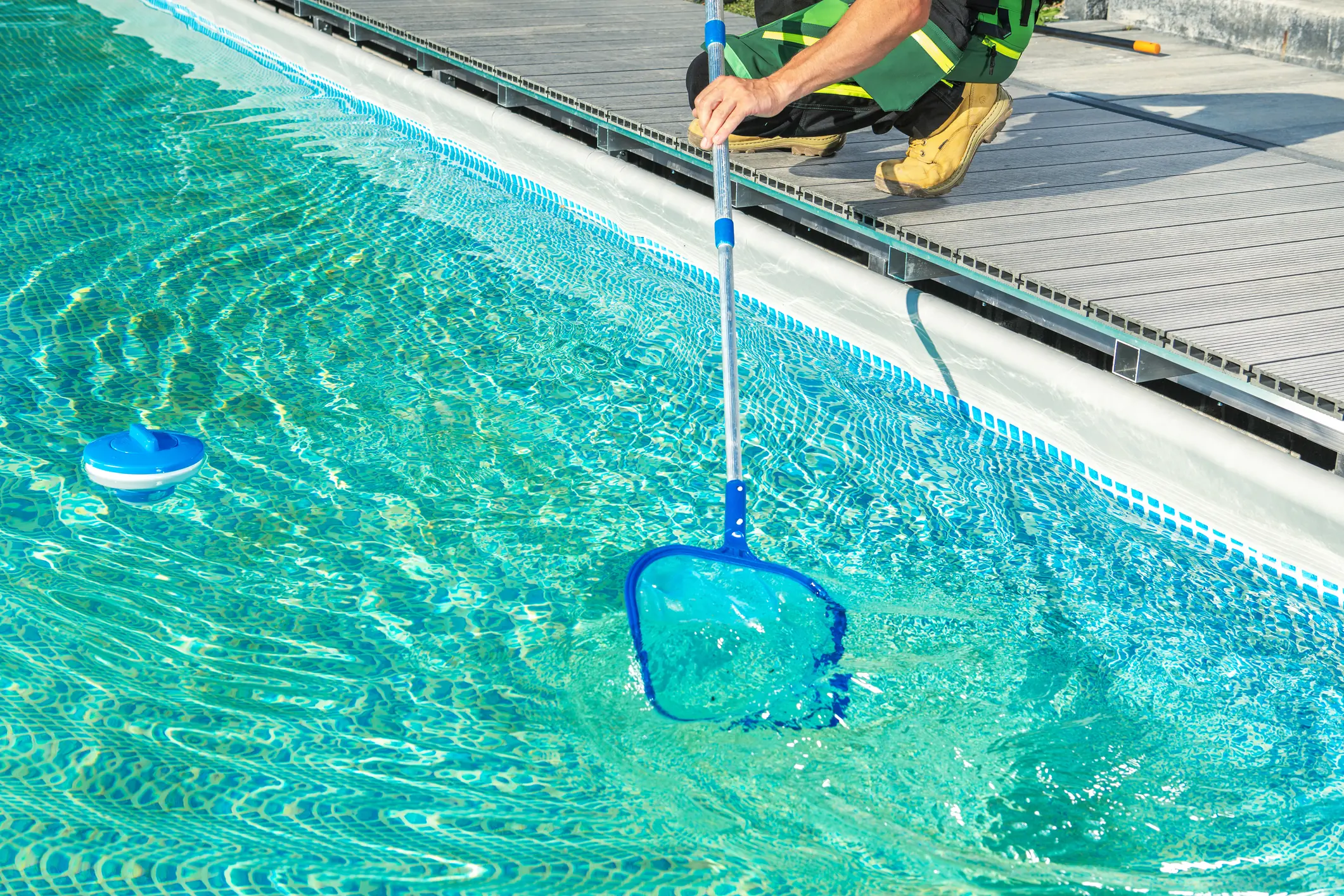
How Pool Skimmer Cleaning Works And Why It Happens
How pool skimmer cleaning works: skimmers collect surface water and trap floating debris before it reaches the pump and filter. The skimmer creates a suction zone that draws water across the surface, directing leaves, bugs, and oils into a basket. That debris stays in the basket so the filter handles finer particles instead of large matter. Regular cleaning restores normal suction and keeps circulation balanced for the whole system.
- Skimmer basket captures floating debris.
- Water flows from skimmer to pump.
- Filter traps smaller particles downstream.
- Return jets send cleaned water back.
A homeowner might ask whether a full skimmer actually causes cloudy water, and the short answer is yes. When a basket fills, larger material can bypass and reach the filter, reducing filtration and clarity. A simple check is to inspect the basket visually and note if returns weaken during operation. If returns are weak, the problem might be the basket, suction line, or pump performance.
Professionals diagnose skimmer problems by observing flow, checking pump pressure, and inspecting the basket and weir. They may record pump pressure readings and run a visual inspection of the suction port and skimmer throat. Technicians also look for trapped items inside suction lines and test for proper weir movement under operating conditions. If you want to learn basic maintenance steps, review our guide to pool cleaning basics for homeowner-friendly checks.
Seasonal factors influence how often cleaning is needed in San Clemente and Oceanside, California pools. Wind-driven debris and nearby landscaping increase basket loading during certain months. Homeowners should plan more frequent checks during heavy leaf fall or after strong winds. Early attention prevents pump strain and limits the need for deeper filter cleaning later.
Common Causes Of Skimmer Clogs And Blockage
Leaves and yard waste are common culprits that steadily fill baskets and block the skimmer throat. Small debris like pine needles and seed pods can form dense mats that reduce suction quickly. Pets and kids can also drop hair and toys that snag in the weir or basket. Homes near trees in Oceanside, California often see heavier loads after windy days.
Grease and sunscreen build-up creates a thin film that clings to the skimmer walls and weir hinge. That film traps floating dust and fine particles, which gradually narrows the skimmer opening. When oil accumulates, it often spreads across the surface and reduces surface skimming action. Regular surface cleaning prevents this gradual fouling from becoming a blockage.
Structural issues like a cracked or misaligned skimmer throat change water paths and allow debris to bypass the basket. Hair and stringy material can wrap around the skimmer suction port and form internal plugs. Technicians check the throat, suction port, and skimmer lid during an inspection to confirm where the restriction sits. A professional may use a visual inspection and simple tools to clear or repair the affected area.
Plumbing obstructions downstream from the skimmer can also mimic a full basket by reducing flow through the skimmer line. Roots, collapsed pipe sections, or trapped toys create suction loss that shows as weak return jets and noisy skimmer operation. To diagnose, a technician will inspect the basket, test pump pressure, and trace suction lines for blockages. For routine prevention and scheduled maintenance, consider our weekly pool concierge service essentials to reduce recurring clogs.
Warning Signs Your Skimmer Needs Immediate Attention
Slow or sputtering return jets often signal a serious skimmer restriction that needs prompt attention from a technician. You might hear a distinct gurgle or notice air bubbles at the return fitting when the skimmer loses suction. Visible debris that keeps reappearing in the pool despite skimmer cleaning suggests material is bypassing the basket or lodging deeper in the throat. If you see these signs, a professional inspection will narrow whether the problem is the basket, weir, or suction line.
Strong odors near the pool or a persistent film on the water surface can point to trapped organic matter inside the skimmer or plumbing. A trapped mass can decompose and alter chemical balance, which makes chlorine less effective. Technicians will open the skimmer, remove the basket, and inspect the throat and suction port for wrapped material or oily residues. They may also run a pressure gauge on the pump to compare readings against expected values.
Frequent tripping of the pump motor’s breaker or unusually high amp draw during operation are electrical warning signs linked to hydraulic restriction. When the pump works against a clogged skimmer, it overheats and draws more current than normal, which may trip the breaker. A professional would check the pump’s current with a clamp meter and then inspect the skimmer and suction plumbing for flow-limiting blockages. This diagnostic sequence helps determine whether repair or deeper cleaning is required.
If removal of visible debris does not restore normal flow, technicians will perform a suction-line trace to locate hidden obstructions or collapsed sections. They may use a mechanical snake or visual inspection through the skimmer throat to verify the issue and then clear or replace the damaged section. Homeowners sometimes need this service after heavy yard debris enters lines during storms. For ongoing prevention and regular checks, consider adding our weekly cleaning and debris removal to your maintenance plan.
Step By Step Homeowner Skimmer Cleaning Guide
Begin by turning off the pump and locking out power at the breaker to avoid the risk of startup during work. Open the skimmer lid and remove the basket, checking for tangled hair, leaves, or small toys that obstruct flow. Rinse the basket with a hose, aiming through the mesh to dislodge trapped material and inspect the weir for free movement. If debris resists, use a soft brush to scrub residues without damaging the plastic components.
- Shut off power before opening the skimmer.
- Remove and empty the basket into yard waste.
- Rinse the basket and scrub oily film gently.
- Check the weir for smooth movement and alignment.
- Reinstall the basket and test with the pump on.
After cleaning, restore power and watch the skimmer while the pump runs to confirm steady suction at the throat. Note any gurgling or air bubbles that indicate trapped air or remaining obstructions in the line. Measure pump pressure at the filter gauge to compare current readings with normal operating range for your system. If pressure reads unusually high, consider backwashing or filter maintenance as described in our filter cleaning and backwashing guidance.
If flow does not return to normal, perform a simple suction-line check by shutting off the pump and inspecting the suction port for wrapped material. Use a flashlight and long needle-nose pliers to clear visible jams from the skimmer throat without forcing tools into the plumbing. When you find resistance deeper in the line, stop and call a professional to avoid pipe damage or improper repairs.
When To Call A Professional Pool Service
Call a professional when simple homeowner checks fail to restore steady circulation or when you detect persistent air at the returns. Technicians use vacuum testing and visual inspection tools to trace suction problems without risking pipe damage. They also check pump amperage and pressure readings to determine if components are stressed by a hidden restriction. If you notice repeated gurgling after cleaning, schedule a diagnostic service.
Contact a pro if you smell strong organic odors near the skimmer that regular cleaning does not remove within a few days. A technician will open the skimmer, inspect the throat, and look for decomposing material lodged inside the plumbing. They may perform a suction-line trace and use a mechanical snake to clear deep obstructions safely. This prevents recurring water chemistry issues and repeated chemical use.
Call for professional help when the pump trips breakers or draws unusually high current during operation despite a clean basket. A technician will measure current with a clamp meter and compare readings to expected values for the pump motor. They will also inspect the skimmer, pump basket, and filter gauge to isolate hydraulic or electrical causes. Repairing or replacing damaged components avoids further equipment failure.
Schedule regular professional checks for pools with frequent debris loads or hard-to-access plumbing, especially in Oceanside, California properties with nearby trees. Professionals provide a written equipment inspection and maintenance report that identifies wear, cracked skimmer throats, or slow leaks. That written report helps homeowners plan repairs and avoid emergency calls. For consistent results, consider adding routine equipment inspection and maintenance to your service plan.
How Skimmer Maintenance Protects Pool Equipment
Regular skimmer maintenance prevents large debris from reaching the pump strainer and motor, reducing wear on moving parts. When the pump runs with less obstruction, bearings and seals experience lower stress and longer service intervals. A technician checking a pump will compare amp draw and temperature readings to expected values to confirm healthy operation. If readings deviate, further inspection or servicing may be required to avoid motor failure.
Keeping the skimmer clear also protects the filter media and pressure system from sudden overloads caused by heavy debris surges. Clogged filters increase backwash frequency and raise system pressure, which can strain valves and piping. Professionals diagnosing pressure issues often record gauge readings, inspect the filter tank, and look for rapid pressure spikes during operation. Those checks help decide whether filter cleaning or component repair is the correct next step.
Consistent skimmer care reduces the chance of foreign objects entering suction lines and jamming impellers, which can cause costly damage to the pump assembly. A common professional diagnostic step is to remove the pump strainer lid and inspect the impeller for wrapped hair or debris that limits flow. If impeller damage appears likely, technicians will recommend repair or replacement and may offer pump motor maintenance options listed under pump motor servicing. Early detection avoids emergency replacements and preserves overall system reliability.
Routine attention to skimmer weirs and baskets cuts down on chemical imbalances that stress equipment materials and fixtures. Organic matter breaking down in hard-to-reach places can corrode metal fittings and accelerate wear on seals and O-rings. A professional will document visible corrosion and recommend targeted repairs or part swaps before leaks develop.
Preventative Habits To Reduce Debris Buildup
Establish a weekly visual routine to spot accumulating surface debris before it reaches the skimmer basket. Check for floating oil or sunscreen sheen and wipe it away with a skimmer pad or cloth. Track how quickly baskets fill after storms or windy days to adjust cleaning frequency. These simple checks help prevent sudden strain on the circulation system.
- Skim daily when swimmers are present.
- Empty baskets after heavy winds.
- Remove oil films promptly.
- Store pool toys after use.
Trim or relocate potted plants and low branches near the pool to limit leaves and flowers from falling into the water. Position outdoor grills and seating areas away from the pool to reduce ash and crumbs landing on the surface. Use a covered trash can with a lid to keep wind from blowing litter into the pool area. Small changes in poolside habits cut down on frequent basket cleanings.
Inspect skimmer components monthly for wear that can catch debris, like a warped weir or cracked basket lips. Replace damaged parts promptly to maintain proper flow and prevent small items from slipping past the basket. A professional technician can confirm part fit and recommend replacements under regular equipment service. Scheduling proactive part checks reduces emergency calls in Oceanside, California.
After heavy debris events, run a short manual vacuum or use a mesh skimmer to catch stray material before it sinks. Monitor chemical levels closely after debris removal, as organics can rapidly alter sanitizer demand. If you see recurring debris patterns or persistent biofilm, call a technician for a targeted inspection. Preventative habits save time and limit wear on pumps and filters in San Clemente, California.
Seasonal Scheduling Tips For Consistent Water Flow
Plan skimmer checks around seasonal milestones like pool opening and closing to avoid surprise flow loss during heavy use periods. Schedule a mid-season inspection to verify baskets, weirs, and suction lines remain clear after spring growth and fall leaf drop. Include a skimmer check on any service visit that follows storms or extended wind events to catch sudden debris increases. Coordinate these checks with regular pump and filter service appointments to keep intervals predictable for homeowners.
Set reminders for more frequent basket emptying during active swim months when skimmer loads rise from frequent use and outdoor activity. Align one monthly professional visit with chemical balancing and a visual equipment inspection to assess wear on skimmer parts. Ask technicians to log pump pressure and weir movement during that visit so you have a seasonal record for comparison. A documented trend helps spot gradual flow decline before equipment stress appears.
When arranging seasonal service, request a simple diagnostic sequence if returns look weak: inspect the basket, test pump pressure, and trace the skimmer throat for blockages. Professionals often perform those checks and report findings, recommending targeted cleaning or minor repairs. If chemical swings follow debris events, combine the skimmer check with water testing and balancing to restore stable sanitizer levels quickly. For routine chemistry support, include a link to our water chemistry testing and balancing service when scheduling.
Consider shifting service frequency based on observed loading patterns rather than fixed months to prevent over- or under-servicing your pool. Homeowners may need extra visits after windy periods that carry yard debris into pools. For properties, align pre-holiday cleanings with expected guest use to ensure steady circulation and clear water. Adjusting the calendar to your yard and usage keeps circulation reliable and reduces emergency calls.
Frequently Asked Questions
How often should I perform pool skimmer cleaning?
Empty the skimmer basket at least once a week during the swimming season to maintain flow and reduce debris buildup. Increase frequency to every 2–3 days after heavy winds, storms, or when leaves accumulate quickly. Inspect the skimmer throat, weir, and basket for damage or clogging during each check and note any irregular sounds. If you find persistent flow loss or damaged components, stop use and contact a professional for diagnosis and safe repair.
Can a clogged skimmer cause cloudy or smelly water?
Yes, a clogged skimmer can trap organic debris and reduce circulation, which often leads to cloudy water and unpleasant odors. Reduced flow prevents the filter and sanitizer from treating all pool water effectively, allowing algae and bacteria to grow. Visible signs include floating debris, slower return currents, and strong chlorine smell or musty odors near the skimmer. If you detect persistent cloudiness or foul smells after basic pool skimmer cleaning, contact a professional to inspect the pump, filter, and water chemistry for safety.
What symptoms indicate a skimmer throat blockage?
You may notice slow water circulation and a weak return flow when a skimmer throat is blocked.
Leaves and stringy debris collecting visibly at the skimmer mouth often indicate the blockage location.
Air sucking into the pump, unusual gurgling, or fluctuating pressure gauge readings suggest restricted skimmer flow.
If you see these signs or suspect a blockage, use caution around moving equipment and contact a professional for inspection.
When should I call a pro for skimmer or suction issues?
Call a professional if you see persistent low suction, gurgling sounds, or rapidly dropping water level after basic pool skimmer cleaning. If debris returns immediately or the skimmer basket clogs repeatedly, a tech should inspect the plumbing and pump. A pro can test pump pressure, check the skimmer weir, and inspect suction lines for leaks or blockages. If you suspect a main drain or suction leak, stop using the pool and contact a professional because of drowning and electrical risks.
How does skimmer maintenance protect pump and filter life?
Regular pool skimmer cleaning prevents large debris from reaching the pump, reducing strain on the impeller and motor. Clogged skimmers force the system to run longer, increasing wear on the filter media and pump bearings. Cleaner skimmer baskets help maintain steady flow and proper pressure readings on the filter gauge. If you suspect damaged impeller blades or abnormal noises, stop the pump and call a professional to inspect and repair.